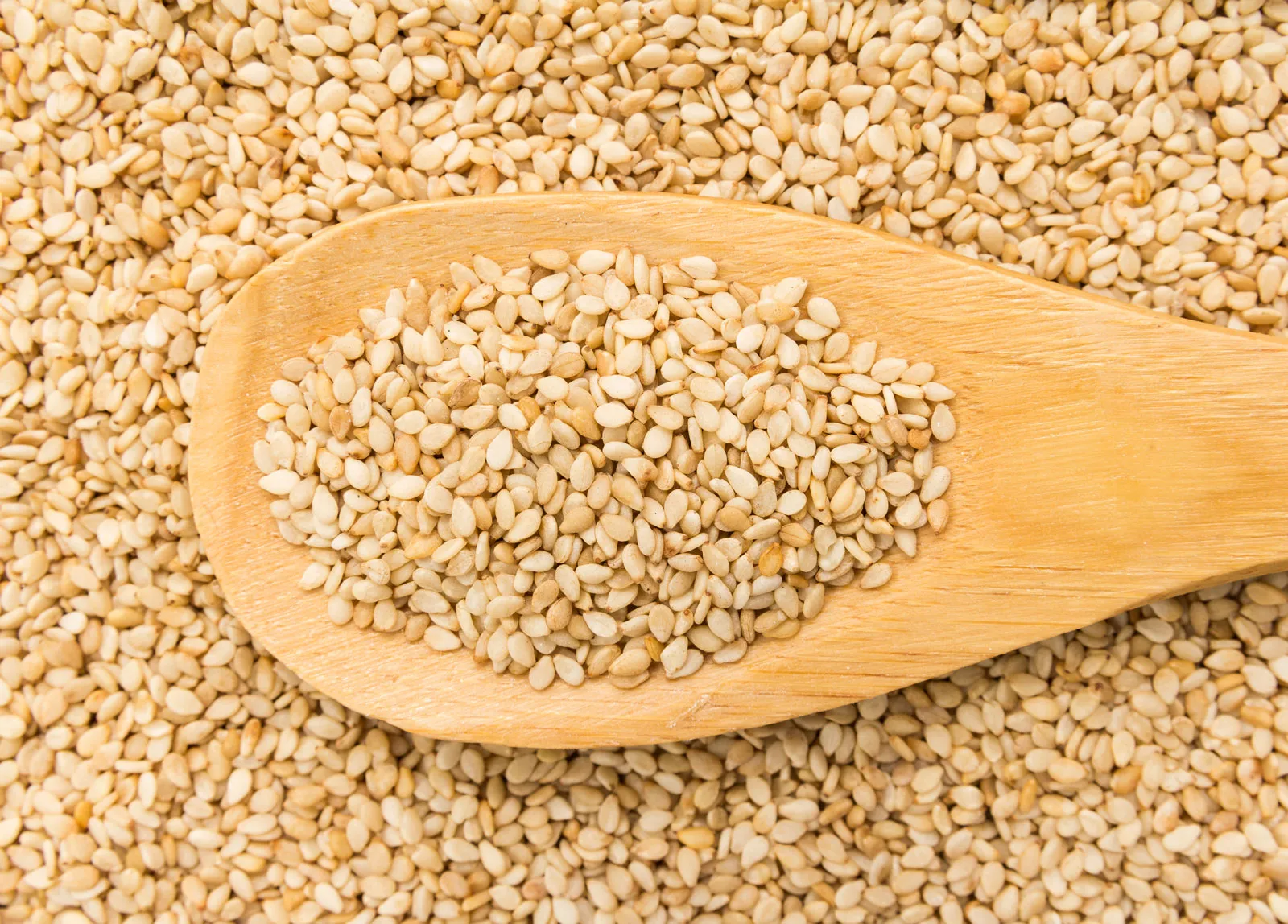
Sesame seeds (Sesamum indicum) are small, oil-rich seeds known for their nutty flavor and versatility. Available in white, black, and brown varieties, they are used in baking, cooking, and oil extraction. Rich in protein, healthy fats, fiber, and essential minerals like calcium, iron, and magnesium, sesame seeds are both a nutritious ingredient and a staple in global cuisines. They require cool, dry storage to maintain freshness and are valued for both culinary and health benefits.
Vitamin B6~0.8 mg
| Type | Typical Color | Main Use |
|---|---|---|
| White hulled | Ivory / white | Bakery, tahini, export markets where pale appearance is preferred |
| Natural (unhulled) | Golden / light brown | Oil extraction, general culinary use |
| Black sesame | Black | Traditional confectionery, rich color/appearance, perceived stronger flavor |
| Brown / mixed | Brownish | Local cuisines, roasted seed snacks |
Sesame seeds contain lignans (sesamin, sesamolin), which are antioxidants that may support cardiovascular and liver health in animal and limited clinical studies. Their unsaturated fatty acid profile (including oleic and linoleic acid) contributes to favorable lipid profiles when used to replace saturated fats. Seeds are also an important plant source of calcium and iron, particularly useful in vegetarian diets.
Sesame is a recognized allergen in many countries and can cause severe allergic reactions in sensitized individuals (including anaphylaxis). Proper labeling and clear communication are essential for food products containing sesame. Additionally, when sesame is used in foodservice, cross-contact with other allergens must be controlled.
Use whole seeds as a topping for breads, crackers, and salads. Toast lightly in a dry pan until fragrant to deepen the nutty flavor. Grind into pastes (e.g., tahini) for spreads, sauces, dressings and dips.
Untoasted sesame oil has a mild flavor and a relatively high smoke point suitable for frying; toasted sesame oil is intensely aromatic and used sparingly as a finishing oil or flavoring agent.
Sesame is produced in many tropical and subtropical regions. Export markets value uniform color and low foreign matter. For buyers, request certificates for pesticide residues, mycotoxin testing, and origin if needed. Traceability and consistent quality control are common purchasing requirements for international trade.
| Product Form | Recommended Storage | Typical Shelf Life |
|---|---|---|
| Raw unhulled seeds (airtight, cool) | Cool, dry, airtight container | 6–12 months (ambient); longer if refrigerated |
| Hulled white seeds | Refrigerate for best quality | 6–12 months refrigerated |
| Roasted seeds | Keep sealed; avoid humidity | 3–6 months |
| Cold-pressed sesame oil | Refrigerate after opening or keep in dark, cool place | 6–12 months (refrigerated) |
This document provides a comprehensive long-form description of sesame seeds suitable for product pages, technical data sheets, or educational use. Modify the numeric values and shelf-life details to reflect your specific laboratory test results, packaging materials, and regional storage conditions where required.
© 2025 99+ Exports