<!doctype html
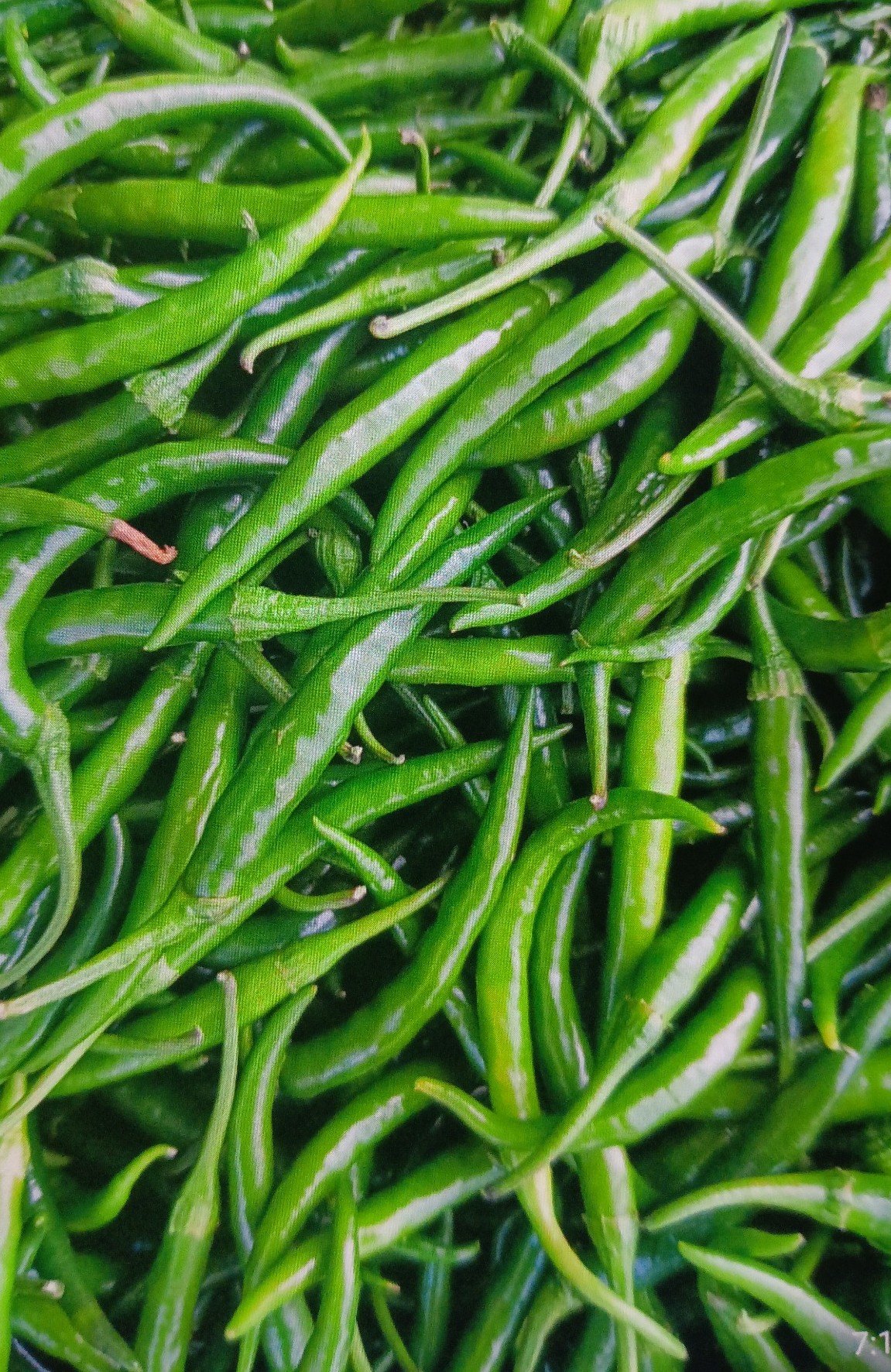
The green chilli (capsicum of the genus Capsicum) is a fresh, unripe stage of many hot pepper varieties prized for their bright, vegetal heat and aromatic freshness.
Depending on the cultivar, green chillies range from gently peppery to fiercely hot, and they bring three key qualities to food: a sharp, spicy warmth, a slightly grassy/green flavour,
and a lively aroma that lifts sauces, salsas, curries and pickles. In many cuisines — South Asian, Southeast Asian, Latin American and African — green chillies are used both whole
and chopped, raw and cooked, to add immediate heat and to build layered spiciness when fried, roasted or stewed.

Botanically, green chillies are simply peppers harvested before they mature to red/yellow/orange colours. When left to ripen they typically become sweeter and change colour,
while some heat compounds (capsaicinoids) may intensify or mellow depending on the variety. Green chillies are valued for their versatility: they can be minced into fresh salsas,
simmered into long-cooked stews to soften and distribute heat, charred for smoky notes, or pickled to preserve both their crunch and their bite.
| Category | Details |
|---|---|
| Scientific name | Capsicum spp. (various cultivars) |
| Typical appearance | Slender to blocky pods, glossy green skin, 3–12 cm long (varies by variety). Flesh can be thin or thick; seeds and membranes contain most of the heat. |
| Flavor profile | Fresh, vegetal, slightly grassy with varying levels of pungency and a faint fruity note in some cultivars. |
| Heat (Scoville range) | From 100 SHU (mild) to >100,000 SHU (very hot) depending on cultivar. Common grocery green chillies (e.g., mild jalapeño-style) often fall between 2,500–10,000 SHU. |
| Nutritional highlights (per 100 g) | Calories ~ 40 kcal; Vitamin C high (covers a large % of daily need); Vitamin A precursors (beta-carotene); small amounts of B-vitamins, potassium and fibre. Chillies also contain capsaicinoids, antioxidants and trace minerals. |
| Common culinary uses |
|
| Storage | Refrigerate whole in a produce bag for up to 1–2 weeks. For longer storage: chop and freeze, or preserve by pickling, drying, or making into pastes/oils. |
| Selection tips | Choose firm, glossy pods with unblemished skin and bright green colour. Avoid soft spots, wrinkles, or blackened areas which indicate age or spoilage. |
| Handling & safety | Capsaicin can irritate skin and eyes — wash hands after handling or wear gloves, and avoid touching your face. If contact with eyes occurs, rinse with water immediately. |
| Regional varieties (examples) | Bird’s eye (very hot), serrano (hot), jalapeño-style (mild-medium), Thai green chilies (very hot), Kashmiri green mirch (milder, aromatic). |
| Typical culinary pairings | Tomato, garlic, lime/citrus, cilantro, onion, cumin, coconut milk, fish sauce, soy sauce, yogurt and cheeses (to balance heat). |
Tip: To reduce perceived heat without losing flavour, remove seeds and the pale inner ribs (where capsaicin concentrates). To increase smoky complexity, char the skin directly over flame and peel off the blackened skin before chopping.