Dried Mango
A consumer-facing long description and technical overview of dried mango: varieties, production notes, sensory profile, nutrition, shelf life, packaging and storage guidance.
Overview
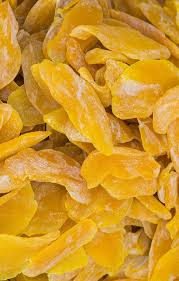
Dried mango is the result of carefully dehydrating fresh mango slices until they reach a stable moisture level that preserves flavor, aroma and nutrients while extending shelf life. It is a popular snack globally — appreciated for its concentrated tropical sweetness, chewy texture, and convenient portability. Dried mango is sold in many formats: naturally sun-dried or mechanically dehydrated, sweetened or unsweetened, and as whole slices, strips or diced pieces.
Typical uses: on-the-go snack, inclusion in trail mixes, baked goods, breakfast cereals, ice cream and confectionery, or rehydrated for sauces and compotes.
Production & Processing
Production typically includes washing, peeling, slicing, optional sulfiting (to retain color and inhibit microbial growth), drying (via solar, hot-air or freeze-drying), cooling and packaging. Drying reduces water activity (aw) to a level that prevents most microbial growth; the final texture ranges from leathery-chewy to brittle depending on moisture target and drying method.
Common processing steps
- Selection of ripe-to-semi-ripe mangoes (variety matters for flavor intensity).
- Peeling and uniform slicing for even drying.
- Pre-treatment: blanching, sulfiting or sugar infusion (optional).
- Drying at controlled temperature and humidity until target moisture or aw achieved.
- Cooling, sorting, trimming, and packing under hygienic conditions.
Nutritional Information (typical)
The table below shows approximate values per 100 g of commercial dried mango (values are typical averages — formulations vary widely, especially between sweetened and unsweetened products).
| Component | Amount (per 100 g) | Notes |
|---|---|---|
| Energy | ≈ 300–330 kcal | Concentrated sugars raise caloric density vs fresh fruit. |
| Carbohydrate | ≈ 70–80 g | Mostly sugars (natural + added if sweetened). |
| Sugars (total) | ≈ 60–70 g | Varies widely — check label for added sugar content. |
| Dietary Fiber | ≈ 3–6 g | Lower than you’d expect per fresh weight but concentrated by drying. |
| Protein | ≈ 1.5–3 g | Limited source of protein. |
| Total Fat | ≈ 0.5–2 g | Negligible; mostly trace amounts from fruit. |
| Sodium | ≈ 0–50 mg | Higher in flavored or salted formulations. |
| Vitamin A (as provitamin A / carotenoids) | Moderate — variable | Mangoes are a carotenoid source; drying reduces but concentrates some nutrients. |
| Vitamin C | Low after drying | Vitamin C is heat-sensitive and largely lost during drying. |
| Typical shelf-life (commercially packaged) | 6–12 months (ambient) | Depends on moisture, packaging and storage conditions. |
Quality, Safety & Sensory Profile
Quality evaluation focuses on appearance (uniform color with minimal darkening), aroma (fruity, sweet, absence of sour/off notes), texture (flexible and chewy vs brittle depending on spec) and taste (clean mango sweetness, balanced acidity; no fermentation). Common defects: excessive stickiness (overly moist), crystallized sugar on surface (indicates sugar migration), off-odors (fermentation or rancidity in flavored products), and discoloration (oxidative browning).
Storage, Packaging & Handling
Use the recommendations below to maximize shelf life and product quality.
| Aspect | Recommendation |
|---|---|
| Moisture control | Target final moisture ~12–18% depending on product spec; control aw to minimize microbial growth. |
| Packaging | Use barrier pouches with oxygen and moisture barrier (e.g., metallized film), resealable closure for consumer packs. For long-term commercial storage, vacuum or nitrogen-flushed packs improve stability. |
| Temperature | Store at cool, dry conditions (ideally <25°C, <60% RH). Lower temps extend shelf life. |
| Light & Oxygen | Minimize light and oxygen exposure to prevent color and flavor degradation; include oxygen absorbers for long-term bulk storage. |
| Allergens & cross-contact | Manufacture in allergen-controlled facility if required; label for possible cross-contact (e.g., tree nuts) where applicable. |
Product Variants & Labeling Notes
- Unsweetened / Natural: Made from mango only (no added sugars). Label should list only mango and any allowed preservative if used.
- Sweetened: Coated or infused with sugar/syrup. Check nutrition facts for sugar content and ingredient list.
- Sulfited: Some processors use sulfites to retain color; must be declared on label and is relevant for sulfite-sensitive consumers.
- Freeze-dried: Lightweight, crispy texture and higher retention of volatile aroma compounds but more fragile.
Culinary Uses & Ideas
- Snack on its own or combined in a trail mix.
- Chop and add to morning porridge, oatmeal, or granola.
- Use diced dried mango in cakes, muffins or energy bars.
- Rehydrate in hot water for 10–20 minutes for sauces, chutneys, compotes or to blend into smoothies.
Suggested Label Copy (short)
“All-natural dried mango slices — gently dried to preserve the sweet, tropical flavor of ripe mango. No artificial colors; may contain natural fruit sugars. Store in a cool, dry place. See nutrition facts for serving size and calories.”